
Department Events: Spring 2026
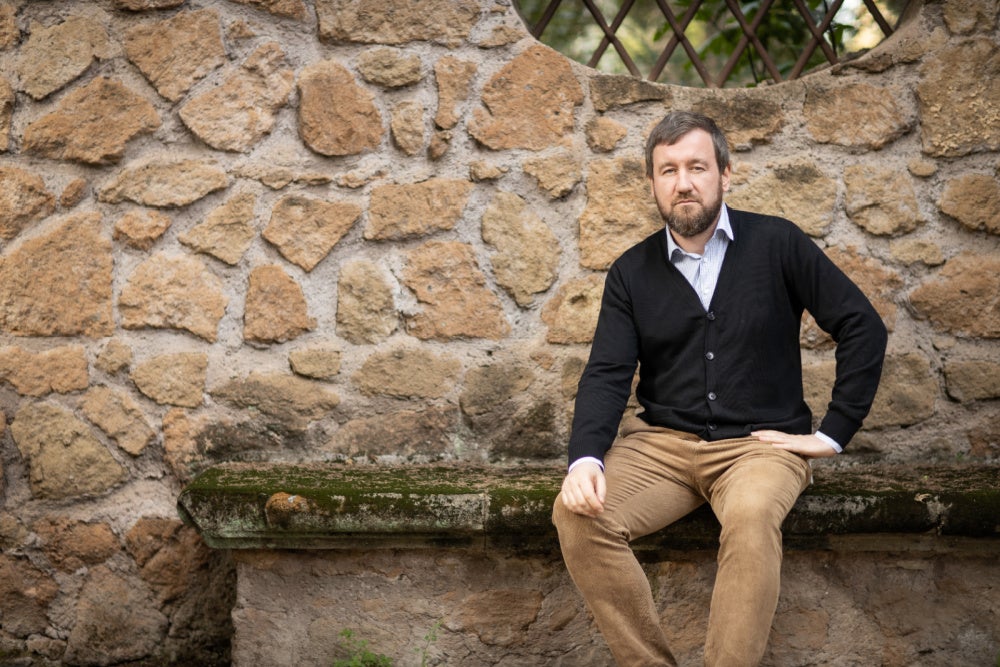
Alexander Schimmelbusch
On February 20, Max Kade writer-in-residence Alexander Schimmelbusch read excerpts from his book Hochdeutschland in German. The reading was followed by a Q&A in which Schimmelbusch discussed the book and its impact and reflected on his time as an undergraduate at Georgetown, where he discovered his love of the Austrian author Thomas Bernhard.
During his stay in DC, Schimmelbusch also partnered with the Austrian and German embassies to organize a panel and book talk with Austrian author Daniel Kehlmann, which took place at the German ambassador’s residence on April 29. Schimmelbusch interviewed Kehlmann about his book Lichtspiel, which has recently been translated from German as The Director and which explores the director G.W. Pabst’s infamous decision to return to Third Reich Germany to make films for UFA, the state-sponsored film studio.
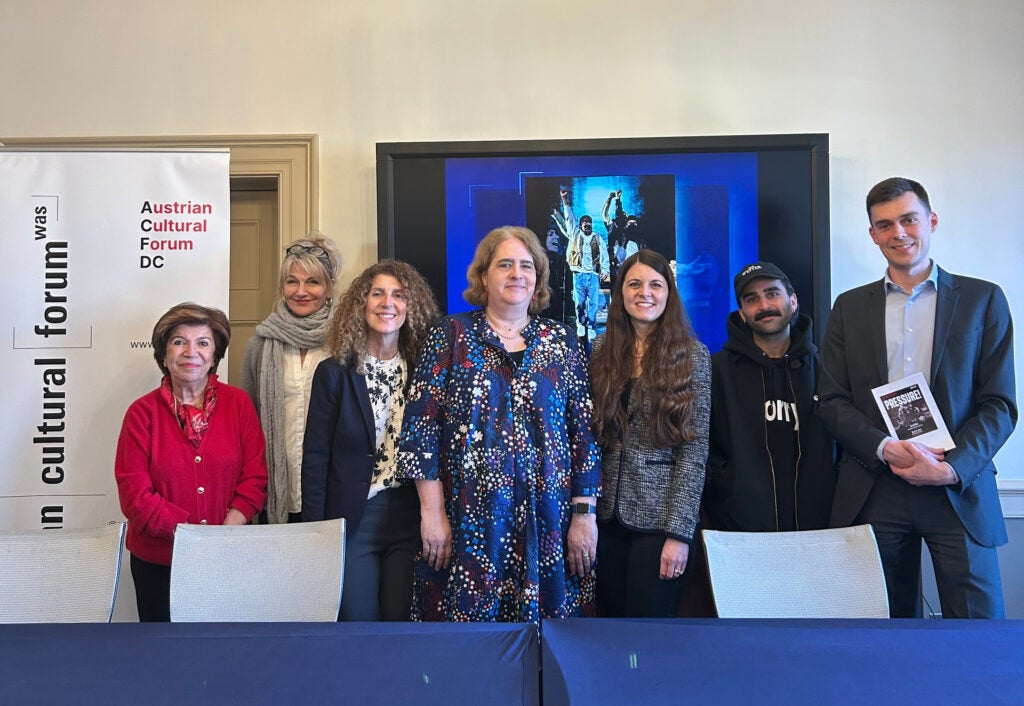
Author Arad Dabiri (second from right) (Photo: Austrian Cultural Forum)
The German Department was pleased to welcome Austrian-Iranian author Arad Dabiri, translator and director Karin Rosnizeck, and members of the ExPats Theatre Company for a special reading and discussion in the Georgetown Humanities Institute on March 18. The event was co-sponsored by the Austrian Cultural Forum, the Persian Studies Program, and the Georgetown Humanities Institute. The reading was inspired by the English-language premiere of Dabiri’s play Druck! (Pressure!), which was performed by the Expats Theatre in Washington, DC, in April and May. Dabiri gave a short lecture in which he reflected on his experiences as a playwright and his expectations for his visit to DC. The reading was followed by a brief scene from the play performed by cast members from ExPats Theatre, and a panel interview with Dabiri and ExPats director Karin Rosnizeck, who also translated the play into English.
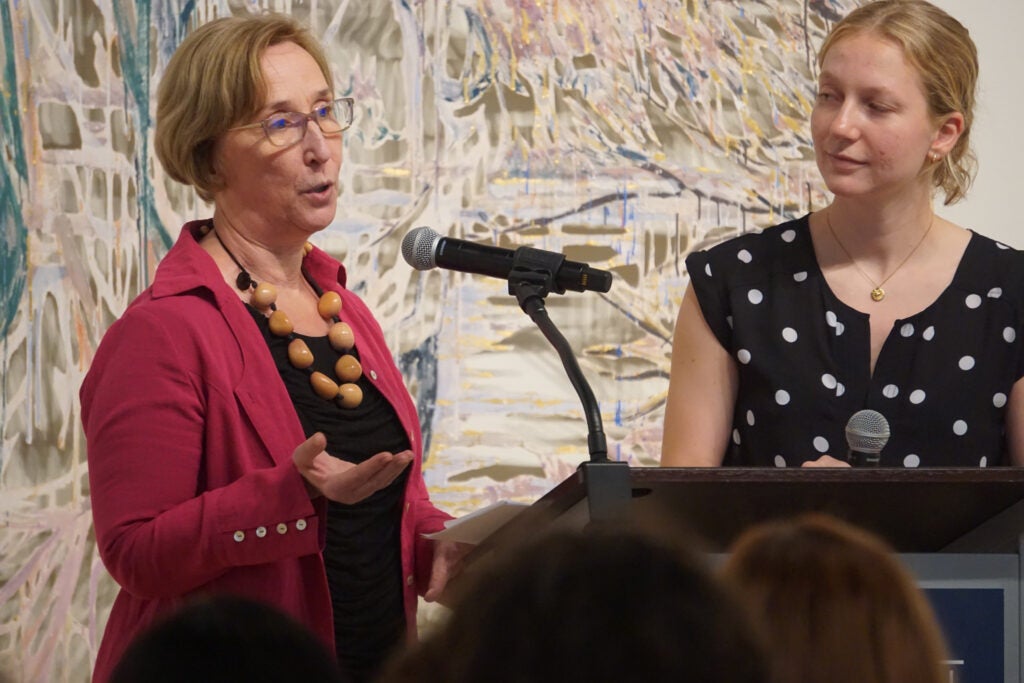
Prof. Astrid Weigert and Madeleine Ott during the Great Women Writers event
The German Department participated again in the “Great Women Writers” event which takes place every year during Women’s History Month. Organized by Prof. Irina Denischenko, this year’s theme was “Mythologies.” Graduating German major Madeleine Ott and Prof. Astrid Weigert contributed a brief bilingual reading of select excerpts from the novel Kassandra by East German Writer Christa Wolf (1929-2011).
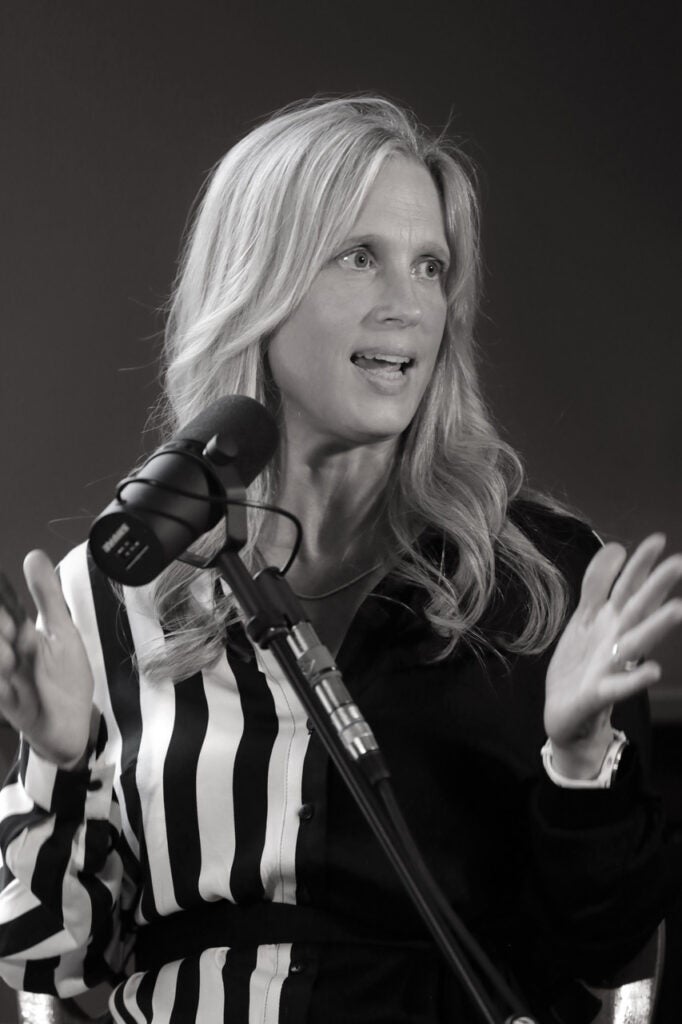
Dr. Nicola Gess (Photo: Stefan Pangritz)
On March 23, Professor Nicola Gess of the Universität Basel gave a fascinating talk in the department on the figure of the Hochstapler or con artist in the culture and literature of the Weimar period. Gess began by discussing examples of con men and imposters of the period such as Harry Domelo, who impersonated a Hohenzollern prince, and the hypnotist Erik Jan Hanussen, who claimed to be a Danish aristocrat. Drawing parallels between these real-life examples and literary works by authors such as Thomas Mann and Lion Feuchtwanger, Gess showed how the figure of the imposter embodied the “twilight of illusion” in the early 20th century, thus laying the groundwork for the eventual rise of the Nazi regime.
In April the editorial team of Gegenwartsliteratur, A German Studies Yearbook offered a workshop for the Department’s graduate students on “Demystifying the Publication Process.” With the help of Prof. Weigert (assistant editor) and doctoral students Katie Lightfoot and Lorna McCarron (current and previous editorial assistants), Prof. Eigler (main editor) introduced the following aspects of the publication process:
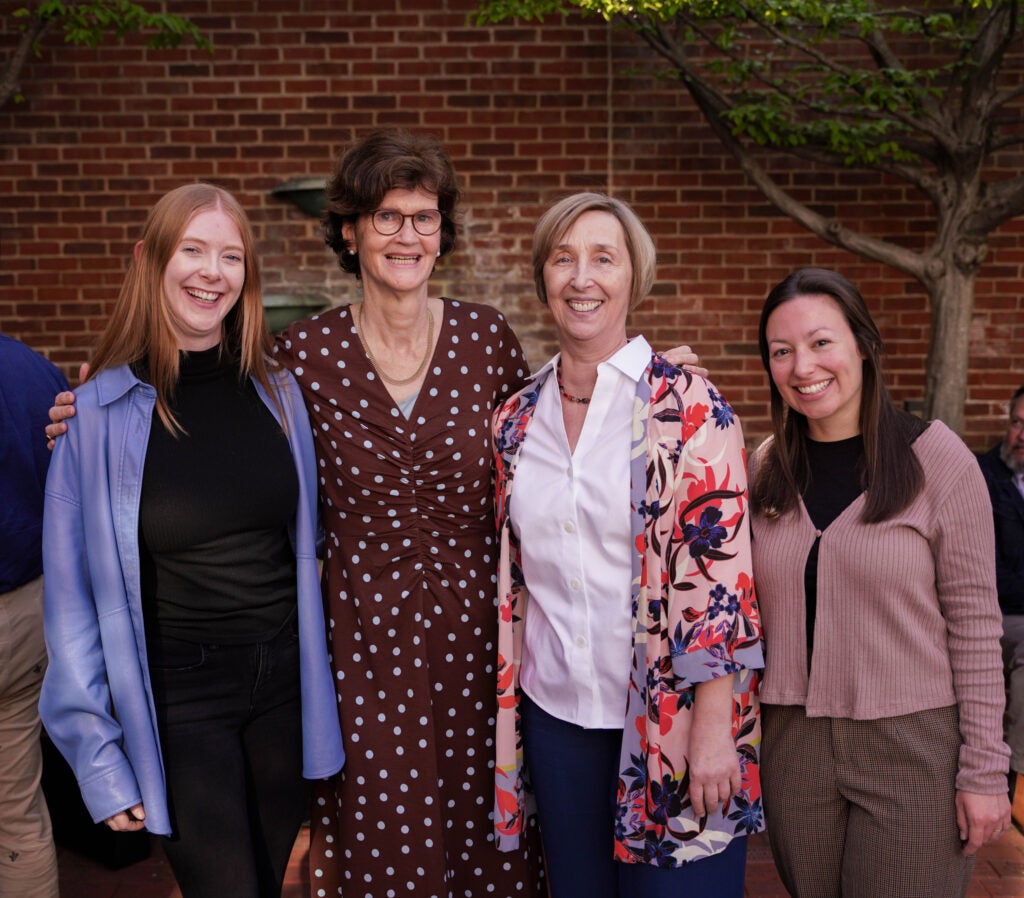
(L to R) Lorna McCarron, Friederike Eigler, Astrid Weigert, and Katie Lightfoot
- German Studies Journals in North America (quick overview)
- The international, open access format of the Yearbook
- Role of special issues vs. regular submissions
- The submission & double-blind review process
- The copy-editing & proof-reading process
As part of the workshop, the editorial team shared anonymized samples of peer reviews & copy-edited articles. Most of the graduate students participated in the workshop, and a lively discussion about all aspects of the publication process ensued. It was indeed “demystifying” for most of the participants that scholars at all stages of their career are frequently asked to revise their scholarly work in response to peer reviews. All scholars – and their published scholarship – benefit from this process.
The final event in the Translation Series, organized by Nicoletta Pireddu in conjunction with the Georgetown Humanities Initiative and the LCL programs, took place on Thursday, April 16. The panel “Translating the Self: Perspective, Positionality, Alterity” featured renowned literary translators and writers Kurt Beals and Bruna Dantas Lobato.
They were in conversation with Professors Friederike Eigler and Alex Brostoff about the ethics and politics of translating identities across languages and cultures. Both translators read excerpts from works they translated into English and from the original. Kurt Beals read from his translation of Jenny Erpenbeck’s Things that Disappear (2025); exchange student Zora Ruhla read the equivalent section from the German original, Dinge die verschwinden (2008) in Berlin dialect or “Berlinerisch.” A book signing and a reception followed the lively discussion at the event.
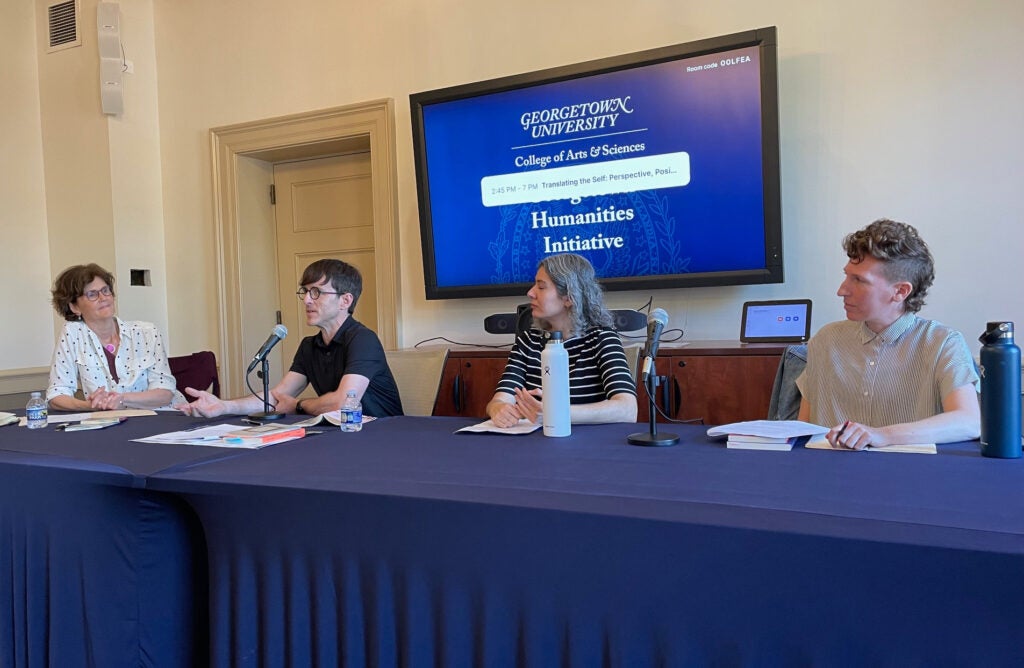
(L to R) Friederike Eigler, Kurt Beals, Bruna Dantas Lobato, and Alex Brostoff
The German Department has been involved in Georgetown’s Language LEAP (Learning, Equity, Access, and Pedagogy) Initiative which is a comprehensive 18-24 month program to support teaching across various language programs. Its strategic approach aims to transcend departmental boundaries and create a holistic, inclusive learning environment. The initiative focuses on enhancing student belonging, inclusion, and equity within language classrooms and enhancing a sense of belonging among those who teach languages on our campus. The Language LEAP looks at what students value most about studying a language at Georgetown and what enhances their sense of belonging in their language classes. Specifically, the Language LEAP consisted of
- a survey of students taking foreign language classes across all languages
- focus groups of students taking foreign language classes across all languages
- student’s voices on belonging in the foreign language classroom as expressed in a digital story assignment in Turkish, Spanish, and German courses
Profs. Ryshina-Pankova and Weigert spearheaded the efforts related to the digital story aspect of the study. Students on the Intermediate and Advanced Level were prompted to “tell the story” of their “encounter(s) with the German language and culture” in a 5-minutes multi-media video presentation. The detailed results of the “Belonging” project will be presented at the 2026 Teaching and Learning Summer Institute on May 20. It was gratifying and encouraging to learn that students expressed a strong sense of belonging and community across all foreign languages offered at GU, including German.